Tuesday, October 25, 2022

Worcester Art Museum


Worcester Art Museum

The Worcester Art Museum, abbreviated WAM, displays nearly 38,000 works of art from antiquity to the present day and representing civilizations from all over the world. WAM, which inaugurated in Worcester, Massachusetts in 1898, is one of the country's most prominent art museums. Its collections include some of the greatest Roman mosaics in the country, as well as exceptional European and American art and a large collection of Japanese prints. Since acquiring the John Woodman Higgins Armory Collection in 2013, WAM has also housed the Americas' second biggest collection of weaponry and armour.  In many ways, it was ahead of the curve in the United States, most notably in collecting architecture (the Chapter House, 1932), purchased Monet (1910) and Gauguin (1921) paintings,  introduced photography as an art form (1904).  The Worcester Art Museum also offers a conservation lab and an adult and kids studio art programmer that runs all year.


History
Stephen Salisbury III and a group of friends created the Art Museum Corporation in September 1896 with the goal of creating an art institution "for the benefit of everyone." Salisbury then donated a plot of land on what was previously the Salisbury farm (now fronting Salisbury Street in Worcester, Massachusetts) as well as $100,000 USD to erect a structure designed by Worcester architect Stephen C. Earle. The Rev. Daniel Merriman was the museum's first president when it opened in 1898. The museum's collection at the time was mostly made up of plaster castings of "ancient and
Renaissance" sculptures, as well as a collection of 5,000 Japanese prints, drawings, and books bequeathed to the museum by John Chandler Bancroft, John Bancroft's son. Stephen Salisbury died in 1905, leaving the museum the most of his five-million-dollar legacy. The Worcester Art Museum grew and gradually collected one of the most important art collections in the country, with some of the essential early works donated or leased by artist and collector Helen Bigelow Merriman. Between 1932 and 1939, the Worcester Art Museum collaborated with a group of museums and institutions to fund excursions to the archaeological locations where Antioch formerly stood. Hundreds of complex floor mosaics were unearthed by this network of museums, which included Princeton University, the Musée du Louvre, the Baltimore Museum of Art, and Harvard University's affiliate, Dumbarton Oaks. The Antioch mosaics, as they are now called, were sent to various institutions.
Many mosaics were donated to the WAM, notably the Worcester Hunt, which is presently situated on the floor of the Renaissance Court


The museum was the victim of a big heist of artwork on May 17, 1972. Just before the museum closed, two guys in masks arrived. The two guys took The Brooding Woman and Head of a Woman by Paul Gauguin, Mother and Child by Pablo Picasso, and St. Bartholomew, which was later ascribed to Rembrandt, a collection valued over a million dollars.  Four people were accused with theft and the theft of seven artworks from Deer field Academy's Borden Library.The Higgins Armory
Museum in Worcester closed its doors in 2013, and its renowned collection of arms and Armour was incorporated into WAM's.  A permanent arms and ammunition  A permanent weapons and Armour gallery will open no later than 2023; in the interim, key items from the Higgins collection, as well as Greek, Roman, Asian, and European works of art, are on display in galleries across the museum. The museum is also reconsidering its institutional narrative, harnessing the collection's richness and depth to create a tale that differs from those told by other museums in the neighborhood. The Worcester Art Museum's new mission statement (approved in 2017) serves as the driving concept for this endeavor: "The Worcester Art Museum links individuals, communities, and cultures through the experience of art."


Admission
Members FREE for Institutional Partners' students, professors, and staff
(See the list of members below)
FREE
Adults $18
Seniors (65 and above)
$14 for students with valid ID
Ages 17 and under are free.

Cummer Museum of Art and Gardens


Cummer Museum of Art and Gardens

Jacksonville, Florida's Cummer Museum of Art and Gardens is a museum. It was established in 1961 following the death of Ninah Cummer, who left her gardens and personal art collection to the new museum. The Cummer Museum has grown to encompass Ninah's brother-in-land, law's but it still has her original garden plans and a piece of her house with its antique furniture. Annually, 130,000 people visit the museum and gardens. The permanent collection of the museum now contains about 5,000 works of art dating from 2100 BC to the twenty-first century. The museum's collection is particularly strong in European and American paintings, and it also has significant holdings of Meissen porcelain. Art Connections, an award-winning educational facility, is also housed inside the museum.It provides a lot of interactive educational facilities and programmers for privileged and special education children The museum grounds include three flower gardens, the oldest of which dates back to 1903. These gardens, built by landscape designers such as Thomas Meehan & Sons and Ellen Biddle Ship man, have remained in their original arrangement for over a century. Cummer Gardens has been listed on the National Register of Historic Places.


History
The Cummer Museum was established in 1902. Arthur and Ninah Cummer constructed their home on Riverside Avenue that year. Wellington and Ada Cummer, Arthur's parents, resided next door, as did his brother Waldo and sister-in-law Clara. Wellington Cummer was a rich lumber baron who relocated to Jacksonville in 1896 from Cadillac, Michigan. The Cummer Lumber Company was formerly Florida's largest landowner. 3 The Jacksonville and Southwestern Railroad was also built by Wellington. Ninah and Arthur Cummer acquired their first item of art, a painting named Along the Strand, straight from the artist, Paul King, during their honeymoon in 1906. 5 Two guys are riding horse-drawn carts on a beach in the artwork. Ada Cummer died in 1931, and Her two sons demolished her old house and split the land. Ninah Cummer commissioned landscape designer Ellen Biddle Shipman to design the Italian Garden on her and Arthur's property. 6 Clara Cummer's share was joined with her existing garden to form Olmsted's garden. Ninah Cummer began collecting art seriously after Arthur's death in January 1943. Ninah grew her art collection to sixty pieces in the fifteen years before her death, all of which are still in the Museum's collection today. 8 Ninah stated in 1957, the year before her death, that her gifts would "just be a little beginning toward a vast goal," 8 and that she hoped "that others will share her vision and through their interest and contributions." will contribute to the establishment of a center of beauty and culture worthy of the community " 8 To oversee her vision after her death, she established the DeEtte Holden Cummer Museum Foundation, named after the Cummers' newborn daughter,


History of museums
From a 1965 brochure, the new Cummer Gallery building.
Ninah and Clara Cummer, both widows, passed away in 1958. Ninah Cummer bequeathed her estate, including her gardens, to the DeEtte Holden Cummer Museum Foundation, which will house her art collection. The brothers' residences were razed in 1960 to make way for the museum. Clara and Waldo's property was sold and is now home to the American Red Cross Northeast Florida branch and Cummer's Art Connections teaching facility. During the destruction, some of the gardens were also damaged. Saxelbye and Powell designed the replacement structure, which was completed in 1961. 7 It has an art deco façade and an interior courtyard with terracotta tiles from the old Cummers.

Training
Art Connections has a chronology of art history.
The museum's 1992 expansion provided place for a new instructional facility named Art Connections. Through hands-on experiences, art lessons, and special student tours, Art Connections has provided arts education to thousands of local kids. 33 Art Connections earned the Institute of Museum and Library Services' National Museum Outreach Award for excellent community service in 1994. 34 In 2004, Art Connections had a comprehensive refurbishment. The majority of the effort went towards implementing new high-tech activities, such as a virtual canvas driven by a laser light brush and a space that transforms dancers' shadows into wall art. 35 Women of Vision, Junior Docents, and other educational initiatives are offered by Art Connections.


ADMISSION & MUSEUM HOURS
Monday is a closed day.
Tuesday from 11 a.m. to 9 p.m.
Wednesday from 11 a.m. to 4 p.m.
From 11 a.m. until 4 p.m. on Thursday.
From 11 a.m. until 9 p.m. on Friday.
From 11 a.m. until 4 p.m. on Saturday
Sunday from 12 p.m. to 4 p.m.

PRICING FOR ADMISSION
Children (ages 5 and under): No charge.
Students (6-17 years old): $10
Adults pay $15.
Senior citizens: $10
$10 for military personnel
College Students: Free Tuesday through Friday, $10 Saturday and Sunday
Free for First Responders and Healthcare Workers

Monday, October 24, 2022

Nasher Museum of Art


Nasher Museum of Art
The Nasher Museum of Art (previously Duke University Museum of Art) is an art museum on Duke University's campus in Durham, North Carolina, United States. The Nasher, along with the Hood Museum of Art in Dartmouth and the Art Museum in Princeton, has been recognized as a college campus institution that "raises the cultural bar."


Discover More About the Collection
Because only a tiny percentage of the Nasher's permanent collection is on display at any given time, a range of tools are available to assist you in exploring the works of art in the Nasher's collection, whether on display or in storage.


Students caption pieces that demonstrate crucial themes from class (this is about looking and relating, not finding a right answer). To explain the relationship, they create a headline and an image caption. Students submit their captions in small groups before choosing one to give to the entire class. The class selects the work and caption that they believe best demonstrates the idea. This is an excellent tool for assessing conceptual knowledge and application.

There is no admission fee!
Everyone gets admitted for free. Jennifer McCracken New and Jason New contributed to this article.


Hours
Monday, the museum is closed.
Tuesdays, Wednesdays, Fridays, and Saturdays from 10 a.m. to 5 p.m.
Thursday, from 10 a.m. to 9 p.m.
Noon to 5 p.m. on Sunday

National United States Air Force Museum


National United States Air Force Museum

The official United States National Museum of the United States Air Force is the National Museum of the United States Air Force. It was once known as the US Air Force Museum. Wright-Patterson Air Force Base is located near Riverside, Ohio, about east of Dayton. It contains nearly 400 aircraft and missiles on exhibit, the majority of which are inside. There is no admission fee.


History
The National United States Air Force Museum has its roots in 1923, when the engineering department at McCock Field in Dayton began collecting technological relics. In 1927, they were relocated to Wright Field and housed in a series of structures. Building 89, the old engine repair hangar at Patterson Field in Fair born, became the first permanent US Air Force Museum building in 1954. Until the present building built in 1971, several of the museum's aircraft were parked outside and exposed to the weather. The museum's block length has more than quadrupled since its inception in 1971, excluding the initial Wright Field-specific expansion.


Exhibition
The National Air Force Museum's lobby. It is adorned with an Icarus statue.
B-29 Boxcar with a Fat man clone The Bock scar, the B-29 Super fortress used to deliver the atomic bomb on Nagasaki during the Pacific War, the lone surviving XB - 70 Valkyrie, and four surviving B-36s are all on exhibit in the National United States Air Force Museum. Many historically and aerotechnically significant aircraft, spacecraft, and associated equipment, notably the Apollo 15 command module, are owned and displayed by the museum. A considerable proportion of the planes on show flew to neighboring runways and fell asleep in the exhibit area. The museum features an extension that exhibits the presidential aircraft of the United States, as well as prototypes and experimental aircraft such as the XB-70 Valkyrie, YF-12, and X-Plane. If you cannot find an exhibit in the main building, it may be presented in the annex, thus it is a good idea to contact a volunteer curator to find out where the exhibit is placed. The Annex is a hangar on the grounds of Wright-Patterson Air Force Base, rather than a museum. Present your picture identification (e.g., Social Security card or driver's licence for Americans, passport for foreigners) and register your name at the desk located between the main museum gift shop and exhibition hall. You can't go without it. Furthermore, tourists are collected in the hall and given attention during the tour. Visitors are permitted to snap photographs within the annex but are not permitted to photograph the air force base's grounds or buildings while on the bus to the annex. In order to prevent incursion into the base, the number of passengers is closely monitored, and if the number of passengers on the return bus does not match the number of passengers on the outward bus, the vehicle will not depart. It takes roughly 2 hours to visit the annex, including transportation, thus it is often difficult for people on tours to visit owing to time limits, so make sure to plan ahead of time.


Pioneer of flight
This enormous museum area is concentrated on the pioneers of aviation, particularly the Wright brothers, who performed test flights from Huffman Prairie, the world's first airport. A replica of the Wright Brothers' 1909 Military Flyer is on exhibit, along with other Wright Brothers artifacts. This section has educational displays as well as the American Aviation History Hall of Fame.

Opening hours
Sunday: 9 a.m.-5 p.m.
Monday 9AM–5PM

Tuesday 9AM–5PM

Wednesday 9AM–5PM

Thursday 9AM–5PM

Friday 9AM–5PM

Saturday 9AM–5PM

Adler Planetarium

Adler Planetarium

Sunday, October 23, 2022

Carnegie Museum of Natural History


Carnegie Museum of Natural History

The Carnegie Museum of Natural History, founded in 1896, is a natural history museum in Pittsburgh, Pennsylvania. The Carnegie Museum of Natural History's research activities are well-known, and it is ranked as one of the top five natural history museums in the United States.


History and description
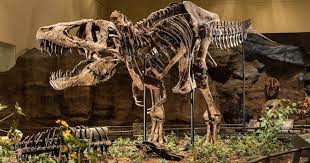
The museum has 115,000 square feet (10,700 m2) of space, which is divided into 20 galleries as well as research, library, and office space. It houses approximately 22 million specimens, approximately 10,000 of which are on display at any given time and approximately 1 million of which are catalogued in online databases. It received 386,300 admissions and 63,000 school group visits in 2008. Museum education staff also actively participates in outreach by visiting schools throughout western Pennsylvania.The museum rose to prominence in 1899, when its scientists discovered Diplodocus carnegii fossils. Notable dinosaur specimens include one of the world's few juvenile Apatosaurus fossils, the world's first Tyrannosaurus Rex specimen, and Anzu wyliei, a newly identified species of oviraptorosaur. Puijila darwini, Castorocauda lutrasimilis, and Hadrocodium wui were discovered by research teams that included former Carnegie scientists. Hillman Hall of Minerals and Gems, Alcoa Foundation Hall of American Indians, Polar World: Wyckoff Hall of Arctic Life, Walton Hall of Ancient Egypt, Benedum Hall of Geology, Dinosaurs in Their Time, and Powder mill Nature Reserve,established by the museum in 1956 to serve as a field station for long-term studies of natural populations, are among the other major exhibits.Anthropology, Birds, Botany, Herpetology (Amphibians & Reptiles), Invertebrate Paleontology, Invertebrate Zoology, Mammals, Minerals, Mollusks (Malacology), and Vertebrate Paleontology are the active curatorial departments at the museum. These departments collaborate under strategic centres established to reframe how the museum leverages its research, exhibitions, and public programming to address the challenges and issues of the day.


Publications in scientific journals
The Carnegie Museum of Natural History publishes scholarly journals and books, such as Annals of Carnegie Museum, which provides peer-reviewed articles in organismal biology, earth sciences, and anthropology; Bulletin of Carnegie Museum of Natural History, which provides monographs or collections of related papers from symposia; and Special Publications of Carnegie Museum, which document special topics or areas of research.


Hours
Sunday hours are 10:00 a.m. to 5:00 p.m.
Monday
10:00 am – 5:00 pm
Tuesday Closed
Wednesday
10:00 am – 5:00 pm
Thursday
10:00 am – 8:00 pm
Friday
10:00 am – 5:00 pm
Saturday
10:00 am – 5:00 pm

Purchase Carnegie Museums of Art and Natural History Tickets
To help us prepare for your visit, we ask that all visitors and members enter the museum with a confirmed timed ticket. Your entry period is determined by the time and date you choose for your ticket. Please arrive at the museum at the time specified. Your visit will not be restricted in any way.
Child 3-18
$12.00
Free for members
Under 2 years old
Free
Senior
$15.00
Free for members
ID-carrying student
$12.00
Free for members

Adler Planetarium


Adler Planetarium

In government
During the 2008 United States presidential election debates in Nashville, McCain attacked Barack Obama for using government funds to improve the Adler skyline. Contract. Senator Barack Obama represents the state of Illinois. McCain described the financial assistance to this center as an example of government waste.  The following day, Adler's Sky gazer published a statement in which it misread Senator McCain's claims and stated, "Scientific literacy is an acute issue in America."


Public hours
Monday: 9:00 a.m. to 4:00 p.m.
CLOSED on Tuesday (school groups only)
Wednesday: 4:00 p.m. to 10:00 p.m.
CLOSED on Thursday (school groups only)
Friday, 9:00 a.m. to 4:00 p.m.
Saturday: 9:00 a.m. to 4:00 p.m.
Sunday: 9:00 a.m. to 4:00 p.m.


Annual Reports and Financial Statements
LOOK BACK REPORT 2021
To say that 2021 was a watershed moment for the Adler Planetarium would be an understatement. With your help, we grew into a full-fledged virtual museum, with programmer reaching astronomers all over the world while remaining firmly rooted in Chicago.
We are excited to take steps toward a full reopening in March 2022 as our brilliant new copper roof begins to emerge, a symbol of togetherness under the sky we all share. We're excited to share with you the following recap of a year unlike any other as we wrap up one historic year and look forward to the next.

Cirque du Soleil

  Cirque du Soleil Cirque du Soleil (France: Cirko de la Suno) is a global rolanta kooperativo of artist groups founded in 1984 in Montreal...